
Overview
The Vivriti SCF Mobile Application was designed to digitize and simplify the Supply Chain Finance lifecycle, from onboarding to invoice financing, while balancing automation with operational control.
Year
2026
Client
Vivriti SCF
Services
UI/UX Design, Research & Visual QA
About
The Vivriti SCF Mobile Application was designed to digitize the end-to-end supply chain finance lifecycle while balancing automation with compliance-driven intervention.
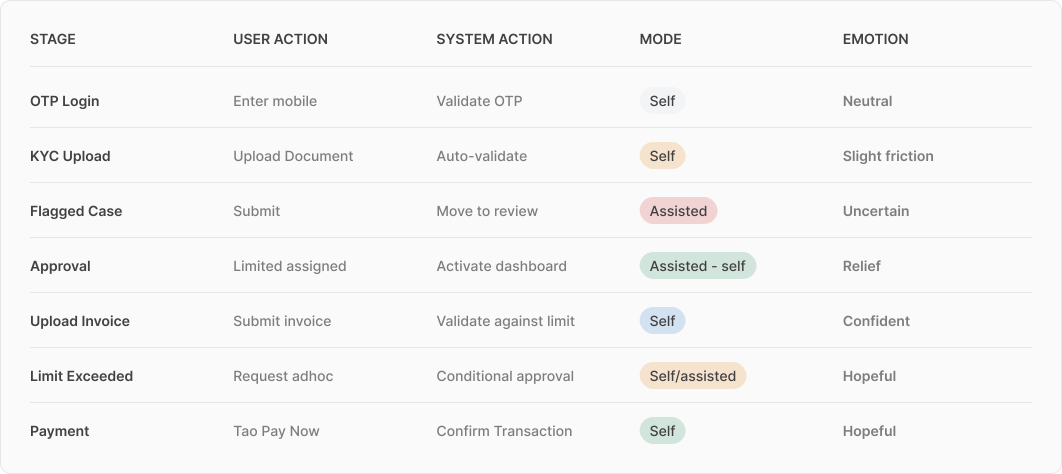
Unlike traditional fintech apps that choose either full automation or full manual review, this product was intentionally built as a hybrid system:
Self Service
Where possible — speed for low-risk actions
Assisted Workflow
Where necessary — oversight for high-risk decisions
Design Process
Research
METHOD
Stakeholder interviews (OPS + Compliance teams)
Partner interviews
Flow audits of existing onboarding & invoice processes
Competitor benchmarking (fintech lending apps)
KEY INSIGHTS
→ Users lacked visibility into credit limit utilization
→ Onboarding drop-offs occurred at KYC stage
→ Invoice uploads were error-prone
→ Adhoc limit requests lacked transparency
→ Assisted cases created anxiety due to unclear status
Wireframing
Financial metric hierarchy
Clear state representation
Reducing cognitive load
Limiting fields per screen during onboarding
"Structure before styling."
UI Design
Large title headers
Card-based layout system
Sticky primary CTA
Status-driven color system
Bottom sheet interactions
Edge-to-edge layout respecting safe areas
"Trust, clarity, modern fintech aesthetics."
Testing
Reduced onboarding confusion
Improved invoice submission clarity
Users preferred inline validation over alerts
Status transparency reduced anxiety
"Validate usability assumptions."
Problem & Solution
Problems
1
Fragmented onboarding
2
Manual dependency on OPS
3
Poor financial visibility
4
Confusing invoice lifecycle
5
Opaque adhoc limit approvals
Solutions
1
Hybrid journey architecture
2
Real-time financial dashboard
3
Intelligent limit validation logic
4
Status-driven UI communication
5
Opportunity
Who
Partners, Authorized Signatories, OPS Team
What
Mobile SCF platform with onboarding + invoice financing

Where
Mobile-first, used in operational business environments
When
During onboarding, invoice upload, limit breach, payment
Workflow Governance
Hybrid journey logic + state transparency + card-based financial UI
User Journey
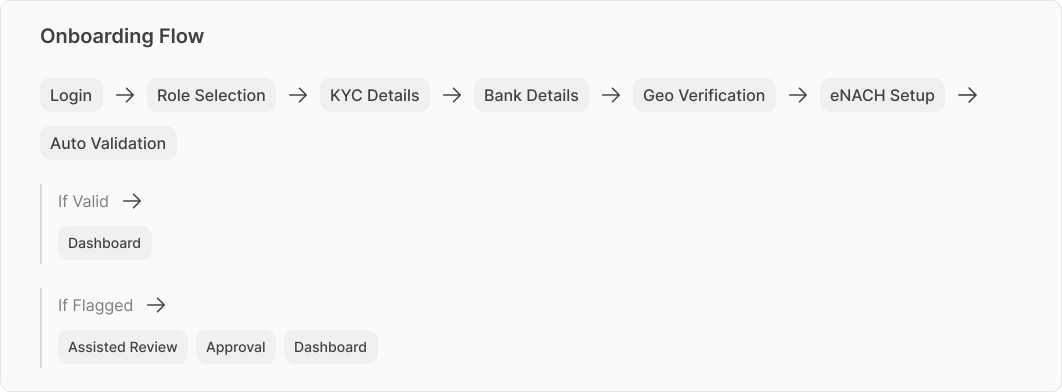
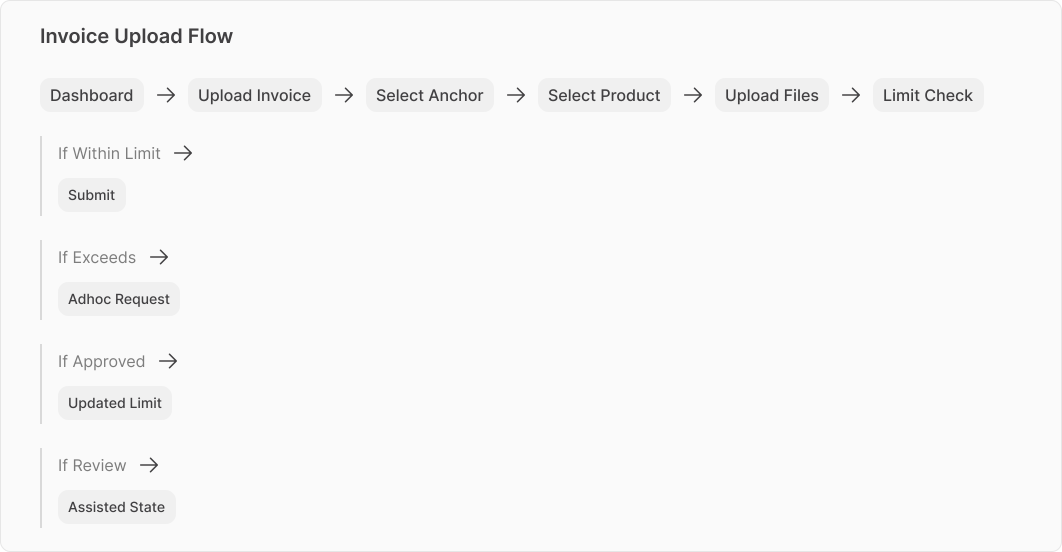
User Flow
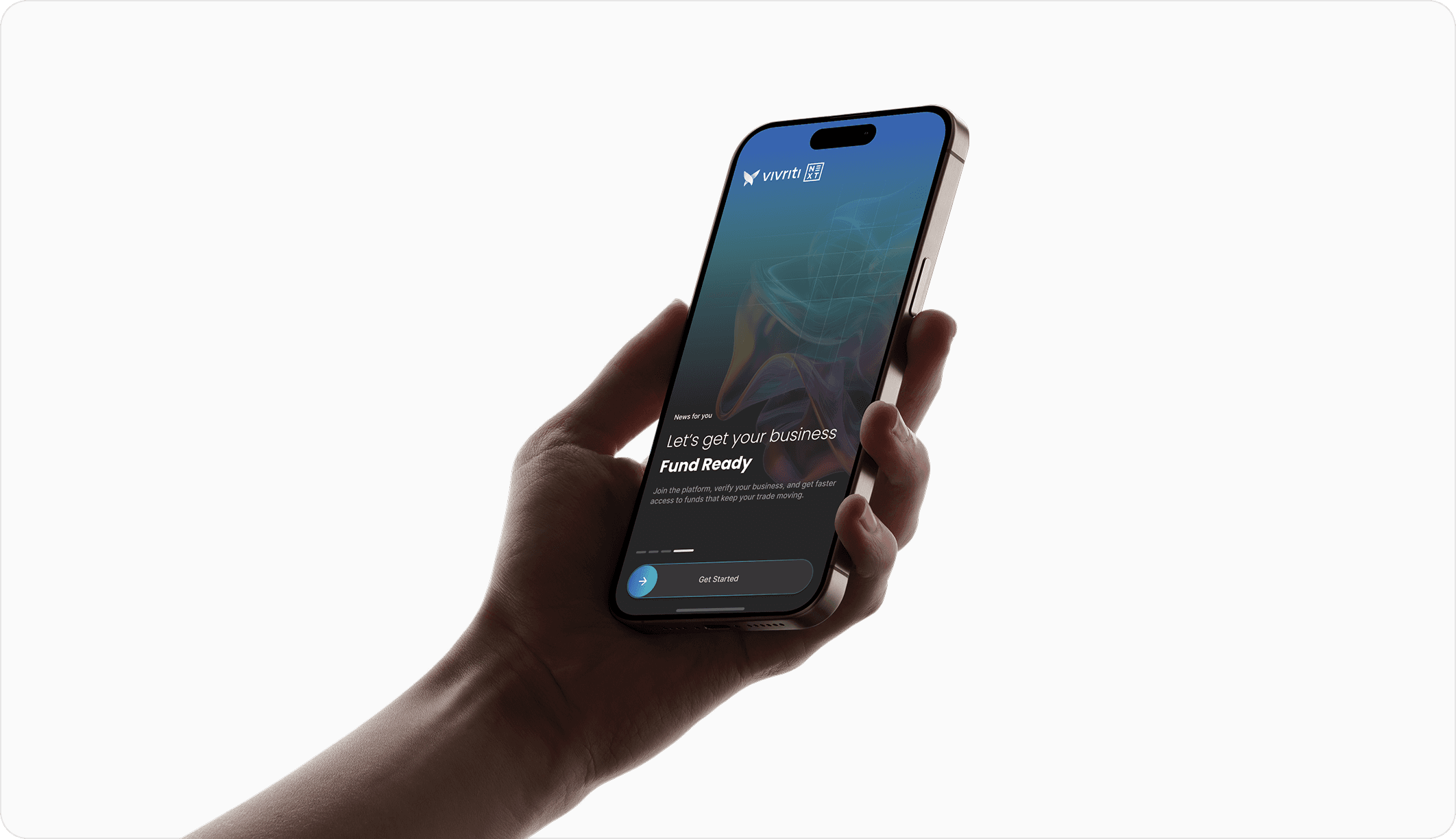
Glimpse of Output
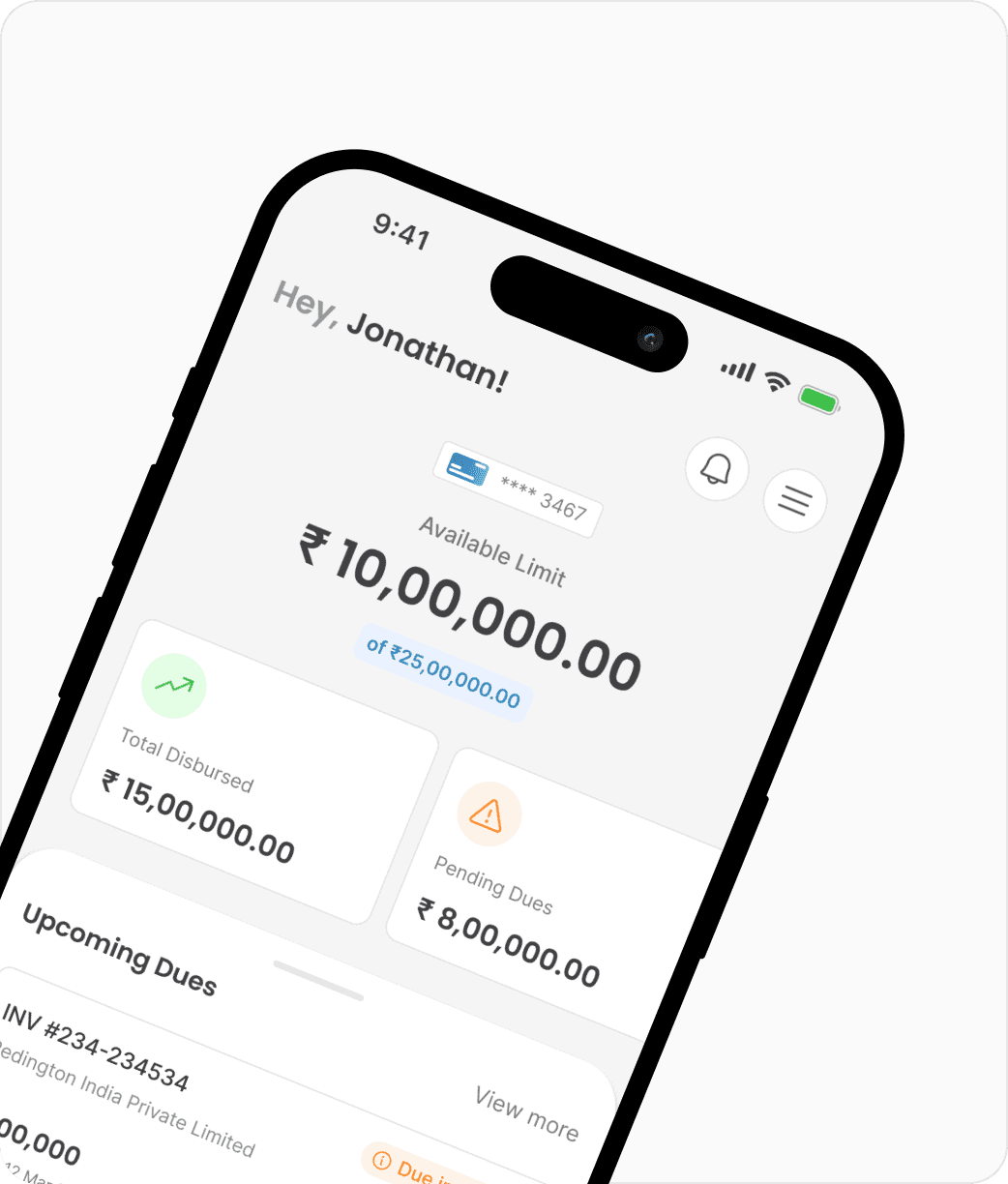
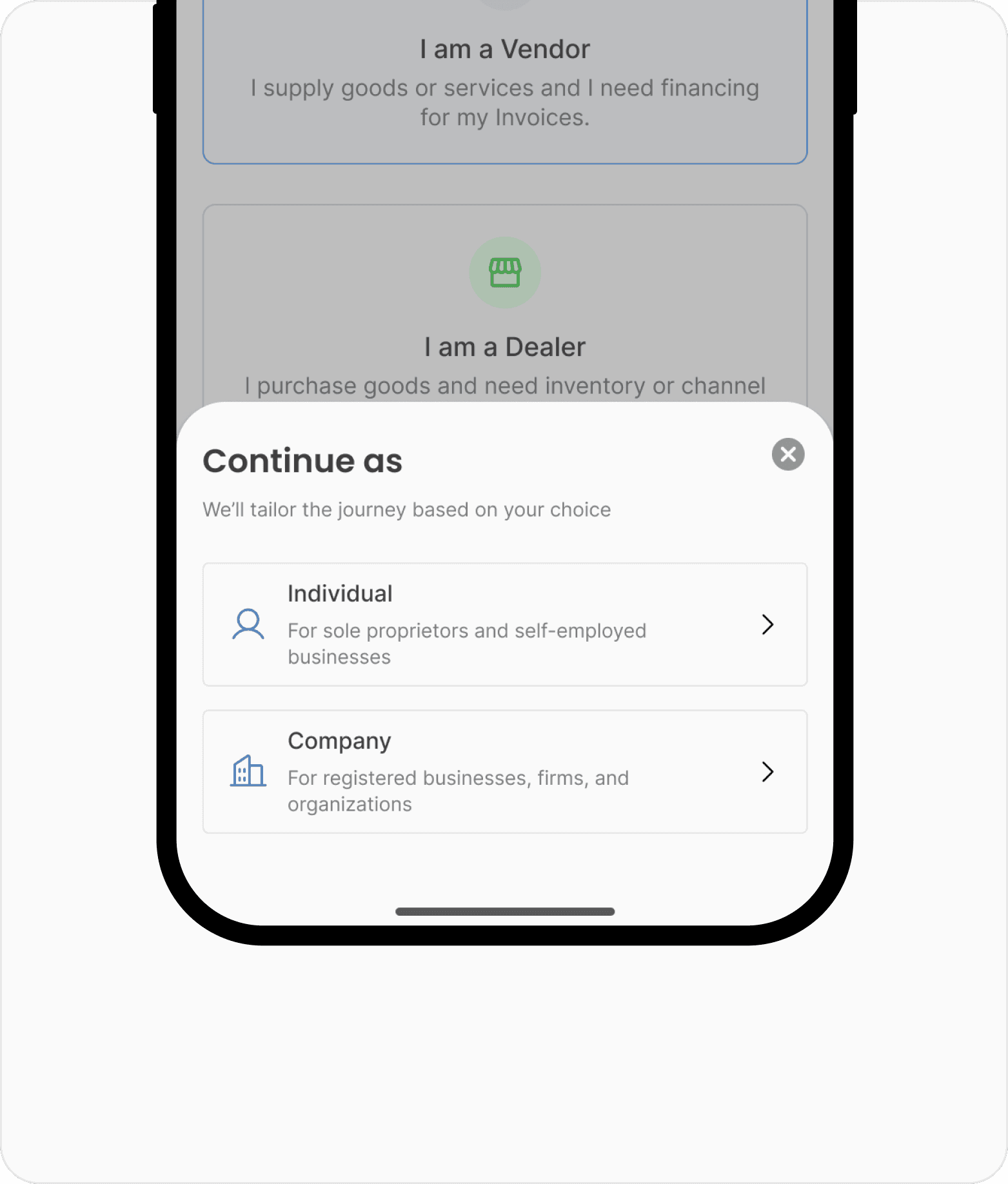
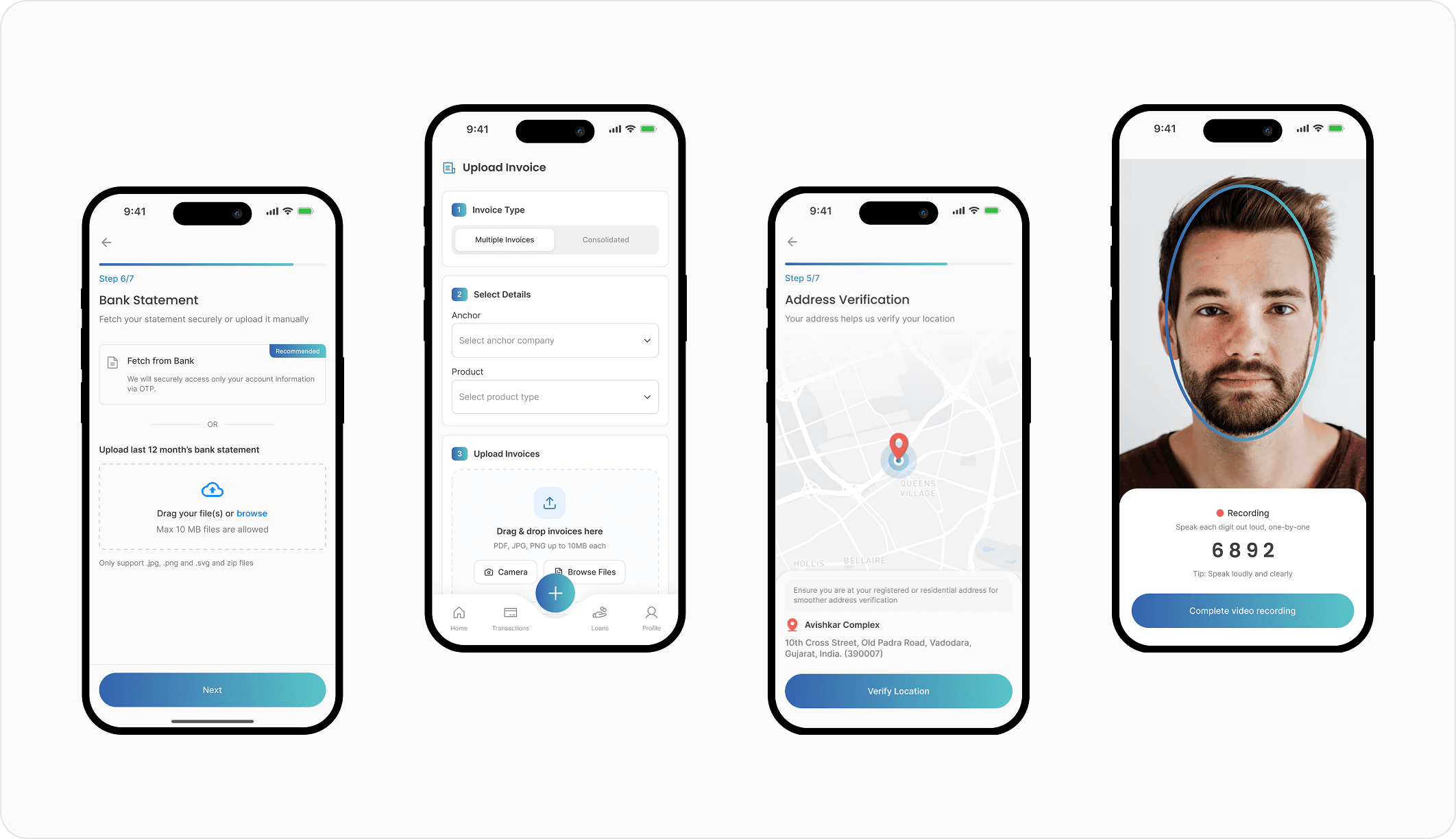
Hybrid journey architecture balances speed with compliance — self-service where possible, assisted where necessary.
Real-time financial dashboards reduce user anxiety and increase confidence in decision-making.
Status-driven UI communication eliminates ambiguity across onboarding, invoicing, and adhoc flows.
Inline validation outperforms alert-based error handling for fintech onboarding experiences.
Card-based metric hierarchy improves scannability and reduces cognitive load on mobile screens.
Designing for transparency in assisted states significantly reduces user drop-off and support queries.